
What is the Internet of Things?
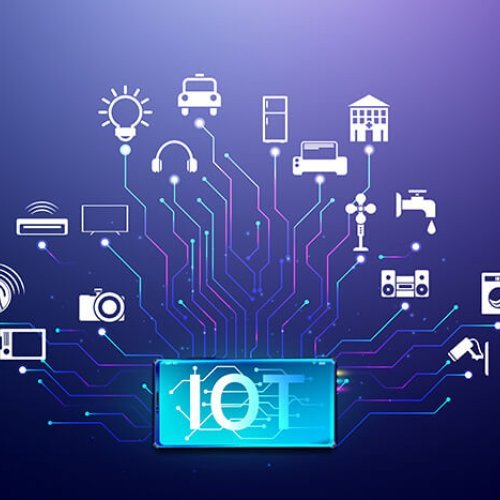
The Internet of Things (IoT) is a system of interconnected computing devices that can collect and transmit data over a wireless network without human intervention.
It is not limited to laptops and smartphones. Almost any device with an on/off switch can potentially connect to the internet and become part of the IoT. For example, the IoT can include a person with an implanted heart monitor, a camera monitoring wildlife in coastal waters, or a car with built-in sensors warning the driver of potential hazards. Essentially, any object that can be assigned a network address (IP address) and transmit data over the network can be part of the IoT.
How does the Internet of Things work?
The IoT system consists of sensors and devices that interact through a cloud connection. Once the data reaches the cloud, software processes it and decides on necessary actions, such as adjusting device settings without user input or sending notifications.
A complete IoT system consists of four separate components: device sensors, connectivity means, data processing tools, and a user interface. Let’s explore each of these components.
Device Sensors
Device sensors collect data from a specific environment. A device may have multiple sensors, such as a smartphone equipped with GPS, a camera, an accelerometer, and more. Sensors gather environmental data for specific tasks.
Connectivity Means
After data collection, the device must send the data to the cloud. This can be done via Wi-Fi, Bluetooth, satellite communication, low-power wide-area networks (LPWAN), or direct internet connection via Ethernet. The connectivity method depends on the application of the specific IoT device.
Data Processing Tools
Once the data reaches the cloud, software processes it to determine necessary actions. These actions may include sending alerts or automatically adjusting device sensors without user intervention. However, some cases require user input, which necessitates a user interface.
User Interface
The user interface allows for data input from users or system status verification. User actions are transmitted through the system: from the user interface to the cloud, and then to device sensors for requested changes.
IoT devices use different connectivity protocols and network interactions depending on their applications. To simplify and accelerate data collection processes in IoT, artificial intelligence (AI) and machine learning are increasingly used.
Applications of the Internet of Things
The IoT is used in numerous fields. Below are some of the most popular applications.
Wearable Devices
Wearable devices are perhaps the most noticeable type of IoT devices for the general public. These include fitness trackers, smartwatches, smart glasses, virtual reality headsets, and more.
Smart Homes
A smart home system includes household appliances that automate specific tasks and are typically controlled remotely. IoT devices in a smart home include wireless kitchen appliances, mood-detecting music systems, smart lighting systems, motorized blinds, automatic windows and doors, smart utility meters, and other devices.
Smart Cities
Smart cities use IoT devices such as sensors and meters to collect and analyze data. These data can be used to improve infrastructure, utilities, and other services.
Autonomous Vehicles
Autonomous vehicles typically use IoT-based technology systems that transmit data about the car and the road it is driving on. Self-driving capability is achieved by collecting and analyzing data on traffic, navigation, surroundings, and more through the vehicle's computer systems.
Retail
IoT is increasingly used in retail. It enables personalized discounts, automated checkouts, smart shelves that alert staff when stock is low, robotic workspaces, and optimized supply chain management. The Amazon Go store network, based on automated shopping concepts, combines online and traditional retail features and is an example of IoT. These stores operate cashlessly, with payments deducted from Amazon wallets in real-time as shoppers pick up items.
Telemedicine
Telemedicine involves using computing and telecommunications technologies to provide medical services. IoT is an important aspect of telemedicine (sometimes referred to as the Internet of Medical Things, or IoMT). Applications include remote medical diagnosis, digital medical imaging transmission, video consultations with specialists, and more.
Smart Agriculture
Smart agriculture involves using digital technologies to optimize farming operations. Farmers can use connected sensors, cameras, and other devices to collect data about their farms and adjust activities to increase productivity.
History of the Internet of Things
The term "Internet of Things" is often attributed to Kevin Ashton, who used it in 1999 while working on supply chain optimization at Procter & Gamble. However, IoT itself emerged long before the term was coined.
-
1970s: The idea of networked devices was called "pervasive computing."
-
Early 1980s: Carnegie Mellon University developed the first known IoT device, a Coca-Cola vending machine that reported its inventory status over the network.
-
1990: John Romkey connected a toaster to the internet for the first time.
-
1991: Cambridge University students used a webcam to monitor coffee levels in a coffee pot.
-
2000: LG Electronics introduced the first internet-connected refrigerator.
-
2008: The first international IoT conference was held in Switzerland.
-
2010s: IoT adoption grew with advancements in Wi-Fi and mobile networks, leading to the mass proliferation of smart devices.
-
2021: Over 46 billion devices were connected to the IoT, with projections exceeding 100 billion by 2030.
Advantages and Disadvantages of the Internet of Things
Advantages of IoT
-
Efficiency: Inter-device communication improves process efficiency and saves time.
-
Automation: Automating repetitive tasks enhances service quality and reduces human intervention.
-
Cost Reduction: Efficiency and automation lower production and delivery costs.
-
Quality Control: IoT improves data exchange and ensures better quality control.
-
Transparency: Accessing information anytime from any device simplifies decision-making.
Disadvantages of IoT
-
Compatibility Issues: Lack of universal standards can lead to interoperability problems.
-
Job Displacement: Automation may reduce workforce demand.
-
Complexity: A single software or hardware failure can cause significant issues.
-
Privacy and Security Risks: The massive amount of IoT-connected devices increases vulnerability to cyber threats.
Future of the Internet of Things
Security Enhancements
Given IoT’s scale and complexity, cybersecurity remains a concern. Future IoT devices will integrate enhanced security measures, including AI-driven protections, blockchain solutions, and edge computing.
IoT in Healthcare
IoT is playing an increasing role in healthcare, especially after the COVID-19 pandemic. The demand for remote medical monitoring, smart health wearables, and advanced diagnostics is rising.
Smart Cities
Cities worldwide are incorporating smart technologies to improve efficiency, inform citizens, and enhance public services.
AI and Machine Learning Integration
AI-driven IoT will lead to intelligent machines capable of making decisions with minimal human intervention.
5G Expansion
5G networks will boost IoT growth by enabling faster data transmission and improved real-time processing. However, the widespread adoption of 5G-connected IoT devices also raises new security and privacy concerns.